Frozen Pipe Cleanup in Thornton, CO
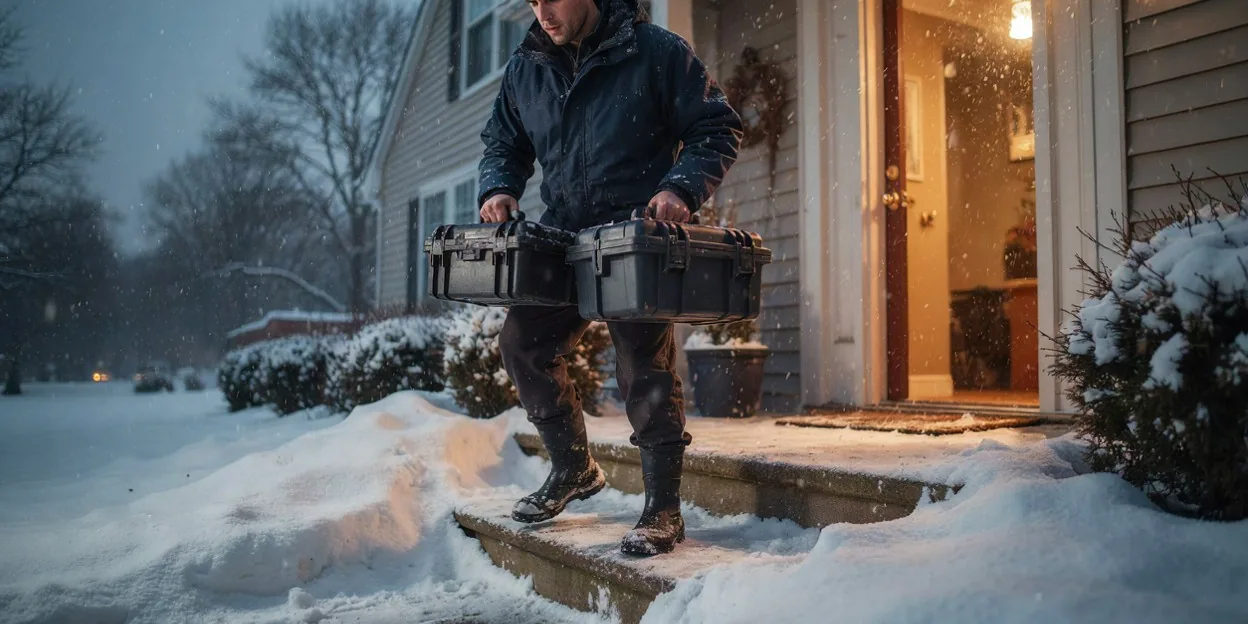
The front came through on a Wednesday afternoon and the temperature fell fifty degrees before midnight. Two mornings later the thaw started, and water was running out from under the drywall behind the garage workbench and into the finished basement bedroom on the other side of the wall. The hose bib line had split while it was frozen, and nothing showed until the ice let go. This site puts you through by phone to an independent local provider who cleans up after frozen pipes in Thornton and across Adams County.
Working out how long the split has been running
Ice in a cracked pipe is its own plug. Nothing drips until the thaw, and the thaw can come a day or two after the cold breaks. So the crew's first questions are when the temperature came up and when the water was found, because that gap tells them how long the wall has been wet. Then they confirm the main is off, pump any standing water, and meter the wall on both sides of the split, the floor below it, and the ceiling under it if there is a room downstairs.
Frozen lines start in the coldest spots in the house: the garage wall, the crawl space under a 1950s Original Thornton ranch, the north wall behind a kitchen sink, and the corner of a basement where the ductwork never quite reaches. From there the water runs down the studs to the sill plate and spreads under the basement carpet.
Shut the main, turn up the heat, leave the torch alone
Close the main and keep it closed until the plumber has found the split; a second frozen section often gives way as the house warms. Turn the heat up. Open the sink cabinets on exterior walls and the tub access panel so heat reaches the pipes, and keep torches and heat guns away from anything inside a wall. Move what you can carry away from the wet wall, photograph the wall and the floor, and make the call. The plumber fixes the pipe. The cleanup crew dries the house.
What the wet wall gives back
If the crew reaches the framing within a few days, the studs and the sill plate usually dry in place with air movers on them. The fiberglass insulation in the wall almost always comes out, because it held the water against the studs the whole time, and the drywall in front of it comes with it. Carpet in the basement often dries once the pad is gone. Bare garage concrete needs nothing but time once the water is squeegeed off. Once the wet material is out, structural drying runs until the readings say the wall is dry. If the split was upstairs and the water ran into a finished basement, that level gets the full basement flooding cleanup treatment.
Where Thornton pipes freeze first
Northglenn's building code sets the frost depth at 36 inches, and Thornton's houses are built to the same climate. But a supply line does not always stay below the frost. The bi-levels and split-levels built here in the 1980s and 1990s run water to a hose bib along the garage wall, and the two-stories built north of 120th Avenue since 2000 often put a bathroom or a laundry against a north wall over an unheated garage. When an arctic front holds the city below zero for two nights, those runs freeze first.
The pattern repeats every few winters. Denver dropped to 24 below zero on December 22, 2022, the coldest reading in decades, and the arctic outbreak of mid-January 2024 kept the north metro below zero for the better part of three days. Both weeks ended with plumbers and cleanup crews working the same houses. Water reaches the house through the Thornton Water system, but everything past the meter is the homeowner's.
Houses left at 55 degrees over the holidays are the classic case: the living room stays fine while the garage wall freezes. If you travel in winter, shut the main and drain a faucet.
A frozen pipe is often treated as a sudden loss under a homeowner policy. Some policies handle an unheated or vacant house differently. This site cannot say what yours does. Ask the crew to write down when the water was found, what the first readings were, and to keep the photos, so the adjuster gets the timeline in writing.
Calling after a pipe froze
Say which wall or room the water came from, whether the main is off, and whether a plumber is on the way. Say how long the house sat empty, if it did, and whether the water made it into a finished basement. Call (720) 735-3725.