Burst Pipe Water Damage in Thornton, CO
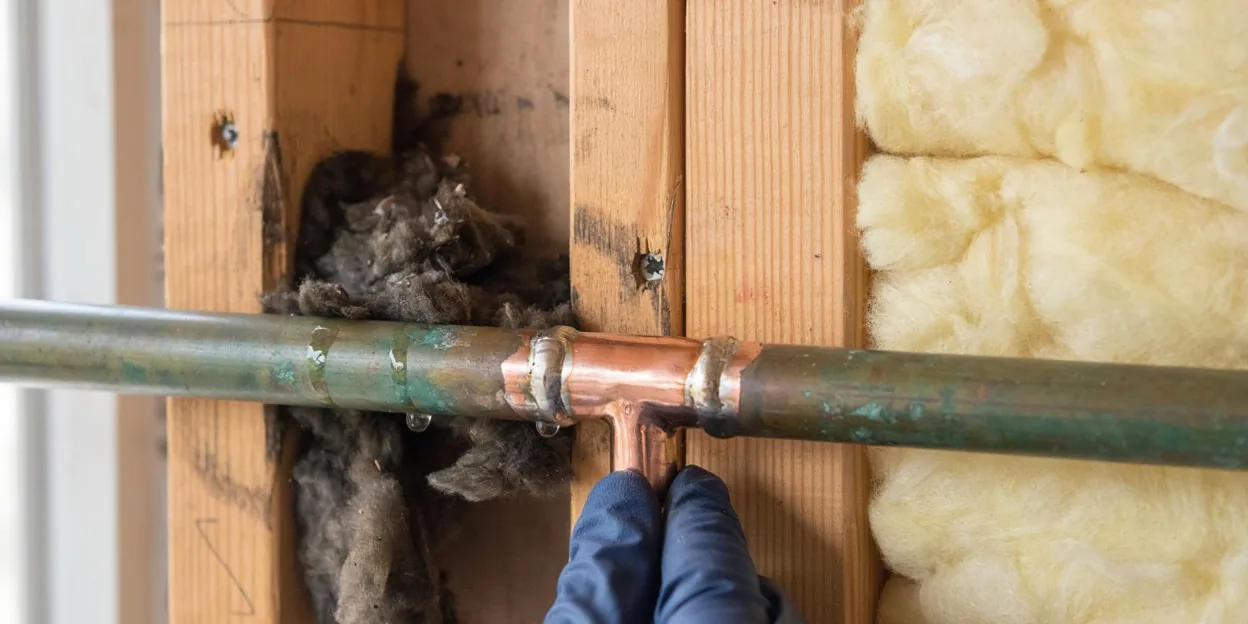
The bang came from inside the wall behind the upstairs bathroom at six in the morning, and by the time you found the main shutoff under the basement stairs the hallway ceiling below was sagging and water was pouring through the light fixture in the kitchen. Nothing froze. A sixty-year-old fitting simply gave up. This site puts you through by phone to an independent local provider who handles burst pipe water damage in Thornton and across Adams County.
Following the water from the pipe to the lowest wet room
A burst supply line runs at house pressure until someone closes the main, and a few minutes at fifty pounds per square inch puts a surprising amount of water into the framing. The crew starts at the break and works down. They meter the wall around the pipe, the floor under it, the ceiling of the room below, and the walls of that room, then the basement if the water made it that far. They pull the standing water first, then drop wet ceiling drywall that is already sagging before it comes down on its own.
In a two-story house the water usually collects in three places: the ceiling cavity below the break, the top of the wall cavities it drained into, and the basement floor at the bottom of the wall.
The first fifteen minutes after the pipe lets go
Close the main shutoff. In most Thornton houses it is on the wall where the line comes through the foundation, near the meter, in the basement or the crawl space. Turn off the breaker for any room where water is coming through a fixture or running down a wall with outlets. Put a bucket under the worst drip, punch a small hole in the center of a sagging ceiling bubble to let it drain in one place instead of ten, and move furniture out of the wet rooms. Photograph everything. Then call, and call a plumber, because the pipe and the cleanup are two jobs that can start the same day.
What a burst line ruins and what it spares
Clean supply water is the kindest kind. Framing, subfloor, and plaster usually dry in place once the surface material is off them. Drywall that got soaked from above and is sagging comes down; drywall that got wet at the bottom and was metered quickly often dries with the baseboard off. Wet insulation in a ceiling or wall comes out. Hardwood on the floor below sometimes comes back with a drying mat system if the crew reaches it fast. After the demolition, structural drying runs against daily readings. If the pipe was a slow drip that nobody noticed for months instead of a burst, leak detection is the page you want.
Why old Thornton pipes fail without a freeze
The first houses in Thornton went up in 1954 as one of the first planned subdivisions in Adams County, and the ranches in Original Thornton near 88th Avenue and Washington Street still carry a lot of their original plumbing. Galvanized steel supply lines from that era rust from the inside until a fitting lets go, usually at a threaded joint behind a wall. The bi-levels and split-levels of the 1980s and 1990s brought copper, which lasts longer but pinholes where the water is aggressive. The two-stories built since 2000 north of 120th Avenue use PEX, which rarely bursts but relies on crimp fittings that can fail at a manifold in the basement ceiling.
Thornton's clay soil adds one more failure. When the ground shifts under a slab or a foundation wall, the pipe through it moves too, and a supply line stubbed through concrete can crack at the wall. The sudden loss from a burst pipe is often covered under a homeowner policy, while a leak that went on for months may be treated differently. This site cannot read your policy. Have the crew document the break, the date, and the first readings so your adjuster has what they need.
Making the call about a burst pipe
Say where the pipe broke, whether the main is off, and which rooms and floors got wet. Mention if a ceiling is sagging, if water reached the basement, and whether a plumber has been called. Call (720) 735-3725.